
Factory-Direct Supply of Certified Wires and Conductors for Diverse Industrial Applications
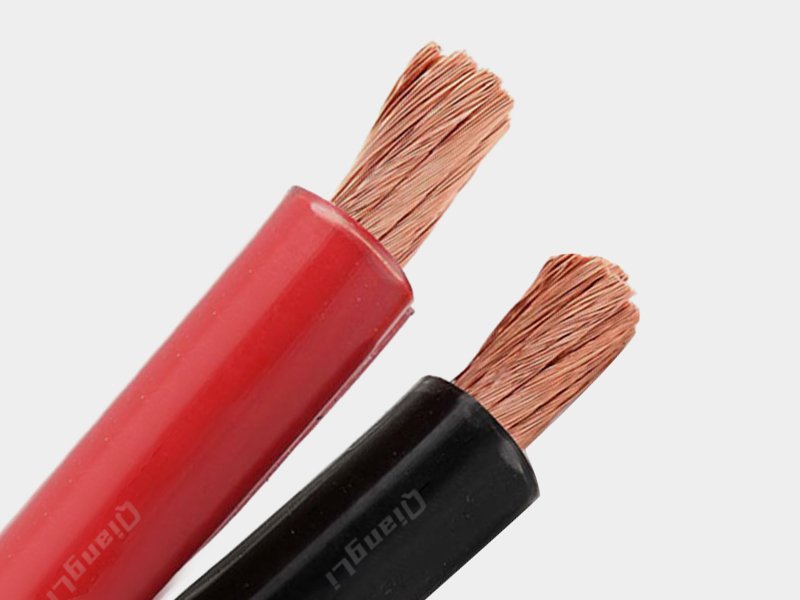
Welding & Battery Cable
Standard: GB/T 5013.2 / IEC 60245-2 (Type 81/82)
Rated Voltage: AC 200V / DC 400V
Conductor: Class 6 extra-fine-stranded bare copper (wire Ø ≤ 0.16 mm)
Insulation: Natural rubber (YH) / EPR; Neoprene variant (YHF) for oil-resistant applications
Core Count: Single core
Conductor Sizes: 6 / 10 / 16 / 25 / 35 / 50 / 70 / 95 / 120 mm²
Max. Working Temperature: +65 °C (continuous)
Min. Operating Temperature: −25 °C
Duty Cycle: 60% standard; 100% available with derating
Product Overview
Welding & Battery Cable (YH) is a single-core, ultra-flexible high-current cable designed for two closely related applications: the secondary circuit of arc welding machines (from the machine to the electrode holder and work return clamp) and heavy-duty battery connections (between batteries, starter motors, inverters, and DC bus bars). Both applications demand the same cable properties — extremely high flexibility, very low DC resistance, robust insulation against mechanical abuse, and the ability to carry hundreds of amperes continuously — which is why a single cable construction serves both markets.
Manufactured to GB/T 5013.2 and equivalent to IEC 60245-2 Type 81/82, YH uses Class 6 extra-fine-stranded bare copper conductors (individual wire diameter as small as 0.16 mm) — finer than Class 5 used in general flexible cables — giving outstanding flexibility even in large cross-sections. The insulation is natural rubber or EPR, rated at AC 200V / DC 400V, with continuous operating temperature from −25 °C to +65 °C. Available in sizes from 6 mm² to 120 mm², covering handheld electrode leads up to heavy MIG/submerged arc machine connections and large-format battery bank cabling.
Class 6 Extra-Fine Stranding
Individual copper wire diameter of 0.16 mm (finer than Class 5) gives the highest flexibility of any copper conductor construction — the cable bends, coils, and twists freely even at 70 mm² and above, without stiff-cable fatigue at the weld point.
High Current Capacity
Low DC resistance and efficient heat dissipation allow YH to carry sustained welding currents — from 120 A at 16 mm² to 450 A at 120 mm² (at 60% duty cycle). Battery applications benefit from the same low-resistance, high-current capability.
Spark & Heat Resistant Insulation
Natural rubber and EPR insulation resist welding sparks, spatter, and the localised radiant heat from the arc without surface cracking or melting — maintaining insulation integrity through thousands of welding sessions.
Oil & Abrasion Resistant
Rubber insulation withstands contact with workshop oils, cutting fluids, and lubricants, and resists abrasion as the cable is dragged across concrete floors, steel plates, and workshop equipment.
Cold Flexibility to −25 °C
Rubber insulation remains pliable at −25 °C — the cable can be coiled and routed in cold outdoor construction sites and cold-climate shipyards without stiffening or cracking at the conductor terminations.
Dual-Use: Welding + Battery
Identical construction serves both arc welding secondary circuits and heavy-duty battery connections — simplifying procurement and stock management for workshops that operate both welding equipment and large battery banks.
Technical Specifications
Basic Parameters
| Standard | GB/T 5013.2 / IEC 60245-2 (Type 81 — natural rubber; Type 82 — EPR) |
|---|---|
| Rated Voltage | AC 200V / DC 400V |
| Conductor | Class 6 extra-fine-stranded bare copper (individual wire ≤ 0.16 mm Ø) |
| Insulation | Natural rubber (YH) or EPR — ethylene propylene rubber (YHF: neoprene for oil resistance) |
| Core Count | Single core (1-core only) |
| Conductor Sizes | 6 / 10 / 16 / 25 / 35 / 50 / 70 / 95 / 120 mm² |
| Max. Working Temperature | +65 °C (conductor continuous); +90 °C (short-circuit) |
| Min. Operating Temperature | −25 °C (remains flexible) |
| Duty Cycle (Welding) | 60% standard (6 min welding per 10 min cycle); 100% duty — derate current by 25% |
| Min. Bending Radius | 4 × OD (general use); 3 × OD (electrode lead coiling) |
| Colour | Black (standard); Red available for positive battery lead identification |
| Abrasion Resistance | Good — rubber resists workshop floor drag and metal edge contact |
| Oil Resistance | Good (natural rubber); Excellent (EPR / neoprene variant) |
| Flame Retardancy | GB/T 18380 |
| Packaging | 50 m / 100 m coil; custom lengths available |
Dimensional & Electrical Data
| Cross-Section (mm²) | No. of Wires | Wire Ø (mm) | Conductor Ø (mm) | Insulation Thickness (mm) | Overall Ø (mm) | Weight (kg/km) | DC Resistance (Ω/km, 20°C) | Current Rating (A, 60% duty) |
|---|---|---|---|---|---|---|---|---|
| 6 | 266 | 0.16 | 2.8 | 2.0 | 8.8 | 78 | 3.08 | 75 |
| 10 | 532 | 0.16 | 3.8 | 2.2 | 10.5 | 125 | 1.83 | 100 |
| 16 | 798 | 0.16 | 4.8 | 2.4 | 11.8 | 195 | 1.15 | 120 |
| 25 | 1197 | 0.16 | 6.0 | 2.6 | 13.8 | 290 | 0.727 | 170 |
| 35 | 1672 | 0.16 | 7.1 | 2.8 | 15.3 | 390 | 0.524 | 210 |
| 50 | 2394 | 0.16 | 8.5 | 3.0 | 17.3 | 540 | 0.387 | 260 |
| 70 | 3346 | 0.16 | 10.1 | 3.2 | 19.5 | 740 | 0.268 | 320 |
| 95 | 4540 | 0.16 | 11.7 | 3.4 | 21.5 | 990 | 0.193 | 390 |
| 120 | 5740 | 0.16 | 13.2 | 3.6 | 23.5 | 1240 | 0.153 | 450 |
Welding Cable Sizing Guide by Welding Current
| Welding Current (A) | Lead Length up to 15 m | Lead Length 15–30 m | Lead Length 30–45 m | Typical Application |
|---|---|---|---|---|
| Up to 100 A | 16 mm² | 25 mm² | 35 mm² | Light MMA, TIG, small inverter welders |
| 100–150 A | 25 mm² | 35 mm² | 50 mm² | Medium MMA, MIG/MAG welding |
| 150–200 A | 35 mm² | 50 mm² | 70 mm² | Heavy MMA, MIG, structural welding |
| 200–300 A | 50 mm² | 70 mm² | 95 mm² | Heavy-duty MIG, submerged arc |
| 300–400 A | 70 mm² | 95 mm² | 120 mm² | High-current MIG, gouging |
| 400–500 A | 95 mm² | 120 mm² | 2 × 70 mm² | Industrial submerged arc welding |
Certifications & Standards
Key Features & Material Advantages
Ultra-Fine 0.16 mm Wire Stranding
Class 6 stranding uses wires as fine as 0.16 mm diameter — over 5,700 individual copper strands in a 120 mm² cable. This extreme fineness makes the cable as supple as a rope, eliminating the stiffness that causes wrist fatigue and reduces electrode positioning precision in manual welding.
Low DC Resistance for Arc Stability
Minimum DC resistance (0.153 Ω/km at 120 mm²) keeps voltage drop to the arc as low as possible. Every ohm of resistance in the welding lead robs arc voltage and reduces penetration — YH's low resistance maximises arc energy delivery at the weld point.
Spark & Spatter Tolerance
Natural rubber insulation resists brief contact with welding sparks and spatter at temperatures up to 300 °C without permanent surface damage. The rubber does not ignite from spark contact — it chars locally and self-extinguishes, preserving insulation integrity.
Torsion & Kink Resistance
Class 6 fine stranding distributes torsional stress across thousands of wires — the cable resists kinking and maintains circular cross-section even when twisted through 360°. Kink resistance is critical for welding leads that are constantly repositioned during work.
Battery Connection Reliability
For battery applications, the ultra-fine stranding provides maximum contact surface area within lug crimps and battery terminal clamps — reducing contact resistance at the termination and preventing the voltage drops that cause starting failures and battery sulfation.
YHF Variant — Enhanced Oil & Flame Resistance
YHF uses a neoprene (polychloroprene) insulation instead of natural rubber — providing superior oil, solvent, and flame resistance for shipyard, offshore, and heavy industry welding environments. Available in the same cross-section range.
Typical Applications
Arc Welding Electrode Leads
MMA (stick), MIG/MAG, and TIG welding machine secondary circuits — from the machine output terminals to the electrode holder and work return clamp.
Submerged Arc Welding
High-current SAW machine connections where sustained 400–500 A currents require large cross-section, low-resistance cable with reliable termination.
Automotive Battery Cables
Engine starter motor connections, battery-to-alternator leads, and jump-start cables where high cold-cranking amperes demand minimum resistance cable.
Industrial Battery Banks
Inter-cell and inter-battery connections in UPS systems, forklift battery packs, and stationary storage batteries where large cross-section, flexible cable is essential for installation in tight battery compartments.
Electroplating & Electrolysis
DC bus connections in electroplating tanks, electrolysis cells, and anodising equipment where high DC current at low voltage demands minimum-resistance cabling.
Shipyard & Offshore Welding
Heavy-duty welding leads for shipbuilding and offshore platform fabrication — long lead lengths require large cross-section to limit voltage drop across hundreds of metres of welding circuit.
Construction Site Welding
Structural steel welding on construction sites — the cable's abrasion and oil resistance handles the rough workshop environment and dragging across concrete and rebar.
Solar Inverter DC Connections
Large-format DC connections between battery banks and off-grid solar inverters where flexibility is needed for installation in tight enclosures.
Related Products
450/750V multi-core rubber sheathed flexible cable — portable power for construction and industrial equipment
450/750V weatherproof variant of YC — enhanced UV and ozone resistance for permanent outdoor use
450/750V EPR+CPE waterproof rubber cable for submersible pump and motor connections
Request a Quote
Frequently Asked Questions
As a factory, we offer flexible MOQ depending on the cable type. For standard stock items, MOQ is low; for customized specifications, please contact our sales team for a detailed quote.
Yes, Qiangli cables are manufactured in compliance with international standards such as UL, CE, TUV, and VDE. We provide full test reports and certificates upon request.
Absolutely. We have a dedicated R&D team that can customize cable structure, material, color, and printing to meet your specific project needs.
For standard products, lead time is usually 7-15 days. For large-scale project orders or customized products, it typically ranges from 20 to 30 days.
Yes, we provide free samples for most standard cables. You only need to cover the international courier costs. Contact us to arrange your sample shipment.