
Product Overview
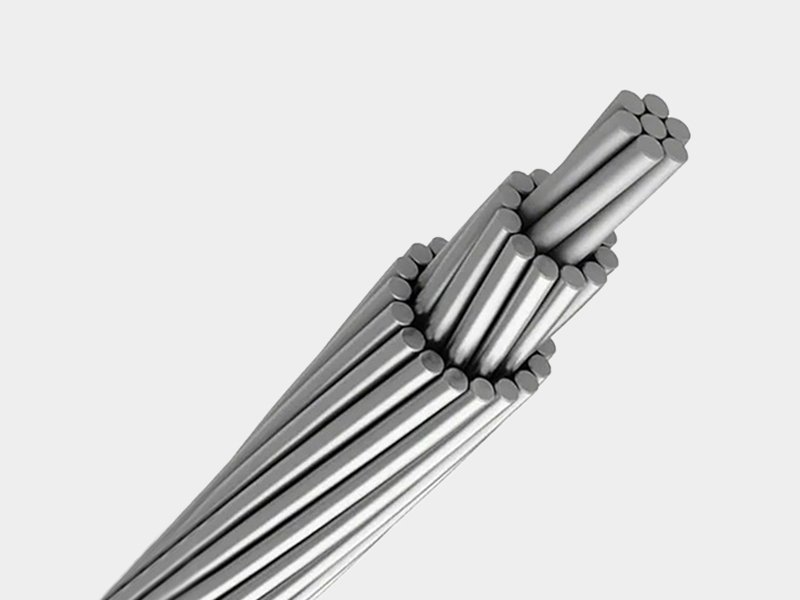
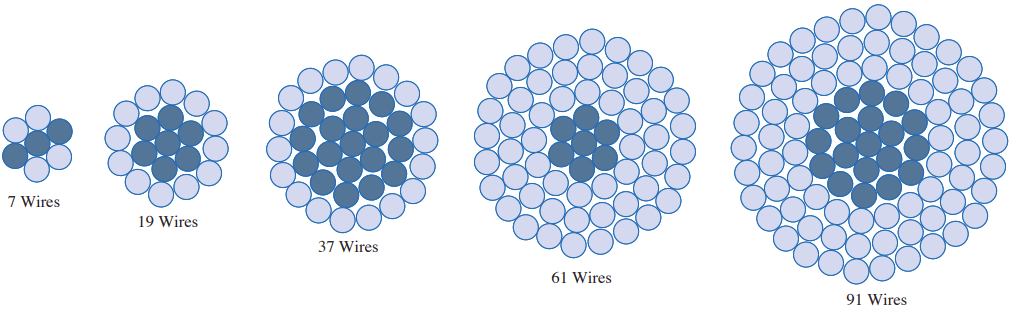
ACAR — Aluminum Conductor Alloy Reinforced (IEC 61089, A1/A2) is a concentric-lay stranded bare overhead conductor produced to IEC 61089 — Round wire concentric lay overhead electrical stranded conductors — using a combination of Class A1 aluminium wires (1350-H19, 61% IACS) and Class A2 aluminium-magnesium-silicon alloy wires (6201-T81 / AlMgSi, 52.5% IACS). In the IEC 61089 classification system, "A1" denotes the high-conductivity 1350-H19 pure aluminium and "A2" denotes the higher-strength AlMgSi alloy — hence the product designation A1/A2. The A1 wires carry the bulk of the electrical current; the A2 alloy wires provide mechanical reinforcement. A critical design feature per IEC 61089 is that all wires in the conductor have the same diameter — enabling A1 and A2 wires to be intermixed within the same layer for maximum design flexibility.
The IEC 61089 A1/A2 ACAR standard is the international counterpart to ASTM B524 — covering the same conductor concept but using the IEC mm² cross-section series and metric wire diameters instead of AWG/kcmil. This makes IEC 61089 A1/A2 the correct specification for ACAR procurement in Europe, Africa, the Middle East, and Asia where IEC standards govern utility infrastructure. Available from 16 mm² to 1400 mm² in 35 configurations, with multiple stranding options (different A1/A2 ratios) for key cross-sections — allowing the conductivity/strength balance to be tuned to each project's span lengths and loading requirements.
A1 Wires (1350-H19) — High-conductivity pure aluminium, 61% IACS, carries bulk electrical current
A2 Wires (6201 AlMgSi) — High-strength aluminium alloy, 52.5% IACS, ~315 MPa tensile strength
Same Wire Diameter — A1 and A2 wires are identical in diameter; can be mixed in the same layer
No Steel Core — All-aluminium family, no bimetallic interface or galvanic corrosion risk
IEC 61089 A1/A2 — Global IEC Standard
Full compliance with the IEC 61089 ACAR specification — accepted by utilities across Europe, Africa, the Middle East, and Asia for overhead line procurement. The mm² cross-section series and IEC material designations integrate directly into IEC-standard project documentation without conversion.
Tunable A1/A2 Ratio
The proportion of A1 (1350) to A2 (6201) wires is varied to optimise the conductivity/strength balance per project requirement. For a given cross-section, a higher A1 proportion increases conductivity and reduces resistance; a higher A2 proportion increases tensile strength and reduces sag at maximum temperature.
No Steel Core — No Galvanic Corrosion
Single-metal-family construction eliminates the galvanic corrosion at the aluminium-steel interface that degrades ACSR in coastal, tropical, and industrially polluted environments. ACAR delivers ACSR-class tensile strength without the steel core corrosion risk over a 40+ year design life.
Better Strength-to-Weight Than ACSR
6201 alloy achieves ~315 MPa tensile strength at aluminium density (2.70 g/cm³) — versus steel's 1270+ MPa at 7.85 g/cm³. For equivalent tensile strength, IEC ACAR is significantly lighter than ACSR, reducing dead load on towers and wind/ice loading on support structures.
16–1400 mm² Size Range
35 configurations from 16 mm² (rural LV distribution) to 1400 mm² (high-capacity HV transmission) — covering the complete IEC overhead line cross-section range within a single standard.
Dual-Configuration Key Sizes
Key cross-sections (250, 315, 400, 450, 500, 560, 630, 710, 800, 900, 1000, 1120, 1250 mm²) are available in two stranding configurations — a high-A1 option (more 1350, lower resistance) and a high-A2 option (more alloy, higher tensile strength) — allowing the engineer to select the optimal balance per line section.
Technical Specifications
Basic Parameters
| Standard | IEC 61089 — Round wire concentric lay overhead electrical stranded conductors |
|---|---|
| IEC Material Designation | A1/A2 — Class A1 (1350-H19 aluminium, 61% IACS) + Class A2 (6201-T81 AlMgSi alloy, 52.5% IACS) |
| A1 Wire (1350-H19) | Hard-drawn aluminium, 61% IACS, tensile strength 160–175 MPa, per IEC 61089 Class A1 |
| A2 Wire (6201-T81) | Al-Mg-Si alloy, 52.5% IACS, tensile strength ~315 MPa, per IEC 61089 Class A2 |
| Wire Diameter Rule | All wires (A1 and A2) have the same nominal diameter within a given conductor; may be mixed in the same layer |
| Construction | Concentric-lay stranded, circular cross-section; adjacent layers in alternating lay directions |
| Size Range | 16 mm² to 1400 mm² — 35 standard configurations |
| Max. Continuous Temperature | 75 °C (A1 component limit) / 90 °C (A2 component limit) |
| Surface Finish | Bare; grease-filled available on request |
| Packaging | Wooden or steel drum; 500 m / 1000 m standard; custom lengths available |
Full Parameter Table — IEC 61089 ACAR A1/A2 (16–1400 mm²)
| Code Number (mm²) | A2 Alloy Area (mm²) | A1 Al Area (mm²) | A2 Stranding (No./mm) | A1 Stranding (No./mm) | Overall Ø (mm) | Weight (kg/km) | DC Resistance (Ω/km, 20°C) | Rated Strength (kN) |
|---|---|---|---|---|---|---|---|---|
| 16 | 9.73 | 7.30 | 4/1.76 | 3/1.76 | 5.28 | 46.6 | 1.7896 | 3.85 |
| 25 | 15.2 | 11.4 | 4/2.20 | 3/2.20 | 6.60 | 72.8 | 1.1453 | 5.93 |
| 40 | 24.3 | 18.3 | 4/2.78 | 3/2.78 | 8.35 | 116.5 | 0.7158 | 9.25 |
| 63 | 38.3 | 28.7 | 4/3.49 | 3/3.49 | 10.50 | 183.5 | 0.4545 | 14.38 |
| 100 | 60.8 | 45.6 | 4/4.40 | 3/4.40 | 13.20 | 291.2 | 0.2863 | 22.52 |
| 125 | 83.3 | 48.6 | 12/2.97 | 7/2.97 | 14.90 | 362.7 | 0.2302 | 27.79 |
| 160 | 107 | 62.2 | 12/3.36 | 7/3.36 | 16.80 | 464.2 | 0.1798 | 35.04 |
| 200 | 133 | 77.8 | 12/3.76 | 7/3.76 | 18.80 | 580.3 | 0.1439 | 43.13 |
| 250 | 167 | 97.2 | 12/4.21 | 7/4.21 | 21.00 | 725.3 | 0.1151 | 53.92 |
| 250 | 131 | 138 | 18/3.04 | 19/3.04 | 21.30 | 742.2 | 0.1154 | 60.39 |
| 315 | 263 | 61.3 | 30/3.34 | 7/3.34 | 23.40 | 892.6 | 0.0916 | 60.52 |
| 315 | 165 | 174 | 18/3.42 | 19/3.42 | 23.90 | 935.1 | 0.0916 | 76.09 |
| 400 | 334 | 77.8 | 30/3.76 | 7/3.76 | 26.30 | 1133.5 | 0.0721 | 75.19 |
| 400 | 210 | 221 | 18/3.85 | 19/3.85 | 27.00 | 1187.5 | 0.0721 | 95.58 |
| 450 | 375 | 87.6 | 30/3.99 | 7/3.99 | 27.90 | 1275.2 | 0.0641 | 84.59 |
| 450 | 236 | 249 | 18/4.08 | 19/4.08 | 28.60 | 1335.9 | 0.0641 | 107.52 |
| 500 | 417 | 97.3 | 30/4.21 | 7/4.21 | 29.40 | 1416.9 | 0.0577 | 93.98 |
| 500 | 262 | 277 | 18/4.31 | 19/4.31 | 30.10 | 1484.3 | 0.0577 | 119.47 |
| 560 | 467 | 109 | 30/4.45 | 7/4.45 | 31.20 | 1586.9 | 0.0515 | 105.26 |
| 560 | 504 | 65.4 | 54/3.45 | 7/3.45 | 31.00 | 1571.9 | 0.0516 | 101.54 |
| 630 | 454 | 205 | 42/3.71 | 19/3.71 | 33.40 | 1820.0 | 0.0458 | 130.25 |
| 630 | 271 | 417 | 24/3.79 | 37/3.79 | 34.10 | 1897.5 | 0.0458 | 160.19 |
| 710 | 512 | 232 | 42/3.94 | 19/3.94 | 35.50 | 2051.2 | 0.0407 | 146.78 |
| 710 | 305 | 470 | 24/4.02 | 37/4.02 | 36.20 | 2138.4 | 0.0407 | 180.53 |
| 800 | 577 | 261 | 42/4.18 | 19/4.18 | 37.60 | 2311.2 | 0.0361 | 165.39 |
| 800 | 344 | 530 | 24/4.27 | 37/4.27 | 38.40 | 2409.5 | 0.0361 | 203.41 |
| 900 | 649 | 294 | 42/4.43 | 19/4.43 | 39.90 | 2600.1 | 0.0321 | 186.06 |
| 900 | 567 | 388 | 54/3.66 | 37/3.66 | 40.20 | 2638.4 | 0.0321 | 199.54 |
| 1000 | 816 | 215 | 72/3.80 | 19/3.80 | 41.80 | 2849.1 | 0.0289 | 190.94 |
| 1000 | 630 | 432 | 54/3.85 | 37/3.85 | 42.40 | 2931.6 | 0.0289 | 221.71 |
| 1120 | 914 | 241 | 72/4.02 | 19/4.02 | 44.20 | 3191.0 | 0.0258 | 213.85 |
| 1120 | 705 | 483 | 54/4.08 | 37/4.08 | 44.90 | 3283.4 | 0.0258 | 248.32 |
| 1250 | 1020 | 269 | 72/4.25 | 19/4.25 | 46.70 | 3561.4 | 0.0231 | 238.68 |
| 1250 | 787 | 539 | 54/4.31 | 37/4.31 | 47.40 | 3664.5 | 0.0231 | 277.14 |
| 1400 | 1143 | 302 | 72/4.50 | 19/4.50 | 49.40 | 3988.8 | 0.0207 | 267.32 |
Understanding the A1/A2 Ratio — Configuration Selection Guide
| Configuration Type | A2 (Alloy) Proportion | A1 (1350) Proportion | Conductivity | Tensile Strength | Best Application |
|---|---|---|---|---|---|
| 30/7 (30 A2 + 7 A1) | 81% | 19% | Lower | Higher | Long spans, heavy loading, river crossings |
| 54/7 (54 A2 + 7 A1) | 89% | 11% | Lower | Highest | Maximum strength requirement |
| 42/19 (42 A2 + 19 A1) | 69% | 31% | Medium | Medium-high | Balanced — general transmission |
| 24/37 (24 A2 + 37 A1) | 39% | 61% | Higher | Medium | Higher conductivity, moderate spans |
| 18/19 (18 A2 + 19 A1) | 49% | 51% | Medium | High | Balanced for medium-long spans |
| 12/7 (12 A2 + 7 A1) | 63% | 37% | Medium-high | Medium | Urban distribution, shorter spans |
Key Features & Technical Advantages
IEC Global Market Access
IEC 61089 A1/A2 designation is accepted for utility procurement across Europe, Africa, Middle East, South Asia, and Southeast Asia — markets that represent the majority of global overhead line investment. No conversion from AWG/kcmil or ASTM code words needed for IEC-specification project tenders.
ACSR Replacement Without Steel Core Risk
For the same rated tensile strength, IEC ACAR A1/A2 eliminates the galvanic corrosion mechanism that is the primary long-term failure mode of ACSR in coastal and tropical IEC-standard markets. ACAR replaces ACSR directly with equivalent or better sag performance and superior corrosion resistance — no tower or hardware modification required.
Higher Effective Conductivity Than ACSR
Because ACAR replaces the non-conducting steel core with additional aluminium alloy wires (which do conduct electricity, even if at lower IACS than pure aluminium), the effective conductor cross-section available for current-carrying is larger than in ACSR of equivalent overall size and weight.
Dual Configuration Flexibility
Most key cross-sections are available in two configurations — a higher-A2 option (maximising tensile strength for long spans) and a higher-A1 option (maximising conductivity for short-medium spans and urban distribution). One standard, two performance profiles per size.
Lightweight for Equivalent Strength
All-aluminium construction (density 2.70 g/cm³ versus steel's 7.85 g/cm³) makes IEC ACAR significantly lighter than ACSR of equivalent tensile strength — reducing pole/tower dead load, foundation requirements, and combined wind-ice loading across the full IEC cross-section range.
40+ Year Coastal Service Life
Single-metal-family construction with no bimetallic interface delivers verified 40+ year service life in coastal, tropical, and industrial pollution environments — matching the design life of modern overhead line infrastructure without the ACSR core replacement risk at year 20–30.
IEC ACAR A1/A2 vs ACAR ASTM B524 — Key Differences
| Parameter | IEC 61089 A1/A2 (this product) | ASTM B524 |
|---|---|---|
| Standard | IEC 61089 | ASTM B524/B524M |
| Size designation | mm² (metric nominal cross-section) | AWG / kcmil |
| Alloy designation | A1 (1350) + A2 (6201 AlMgSi) | 1350-H19 + 6201-T81 |
| Size range | 16–1400 mm² | 4 AWG–3000 kcmil (21–1520 mm²) |
| Primary market | Europe, Africa, Middle East, Asia | USA, Canada, Latin America |
| Wire diameter rule | Same diameter for all wires | Same diameter for all wires |
| Configuration options | 35 configurations (16–1400 mm²) | 98 configurations (4 AWG–3000 kcmil) |
| Strength unit | kN | kgf |
Certifications & Standards
Typical Applications
HV Transmission Lines
Large IEC ACAR (630–1400 mm²) for 132–400 kV transmission in IEC-standard markets where high conductivity and no-steel corrosion resistance are both required.
Coastal & Marine Lines
All-aluminium construction preferred over ACSR in coastal Europe, West Africa, the Gulf, South Asia, and Southeast Asia — salt air and humidity make galvanic ACSR core corrosion the dominant long-term reliability risk.
River & Long-Span Crossings
High A2-ratio ACAR (30/7 or 54/7 configurations) for long-span crossings requiring ACSR-class tensile strength without the steel core weight or corrosion risk.
Urban Sub-Transmission
Medium IEC ACAR (250–560 mm²) for 33–132 kV sub-transmission in IEC-standard urban networks — longer spans reduce pole count in congested urban rights-of-way.
Tropical IEC Markets
High-humidity environments in sub-Saharan Africa, South Asia, and Southeast Asia where IEC standards govern grid procurement and ACSR steel core corrosion is a well-documented 20–30 year failure mode.
Industrial & Petrochemical Zones
Overhead supply to chemical plants and industrial facilities in IEC-standard regions — all-aluminium construction resists the chemically aggressive atmospheres that accelerate ACSR core corrosion.
ACSR Reconductoring
Replacement of corroded ACSR on coastal and tropical IEC overhead lines — IEC ACAR provides equivalent tensile performance and superior long-term corrosion resistance, compatible with existing IEC-standard fittings and hardware.
Rural IEC Distribution
Small-medium IEC ACAR (16–200 mm²) for 11–33 kV rural feeders in IEC-standard Africa and Asia — longer spans than AAC possible on the same pole spacing, reducing infrastructure cost.