
Product Overview
AAC — All Aluminum Conductor (AS/NZS 1531) is a concentric-lay stranded bare aluminium overhead conductor manufactured to AS/NZS 1531 — the joint Australian and New Zealand Standard for aluminium conductors for overhead lines. Produced from hard-drawn 1350-series electrolytic aluminium (minimum 99.7% purity), it is the standard bare overhead conductor specification for distribution and transmission networks operated by Australian state utilities (Ausgrid, Endeavour Energy, Essential Energy, Western Power, AusNet, Ergon Energy, Energex) and New Zealand utilities (Transpower, Vector, Orion, and others).
The defining characteristic of AS/NZS 1531 AAC is its celestial body code name system — each conductor size carries the name of a star, planet, or constellation (Mars, Mercury, Moon, Neptune, Saturn, Sirius, Venus, Orion, Virgo, etc.), rather than the flower names used in ASTM/CSA or the numeric mm² designations used in IEC/BS. These code names are deeply embedded in Australian and New Zealand utility procurement, maintenance documentation, and live-line hardware catalogues — specifying "Mercury AAC" or "Neptune AAC" uniquely identifies the conductor size and standard without ambiguity. Available in sizes from approximately 34 mm² to 674 mm², covering the full range of Australian overhead line conductor requirements from 11 kV rural distribution through to 132 kV sub-transmission.
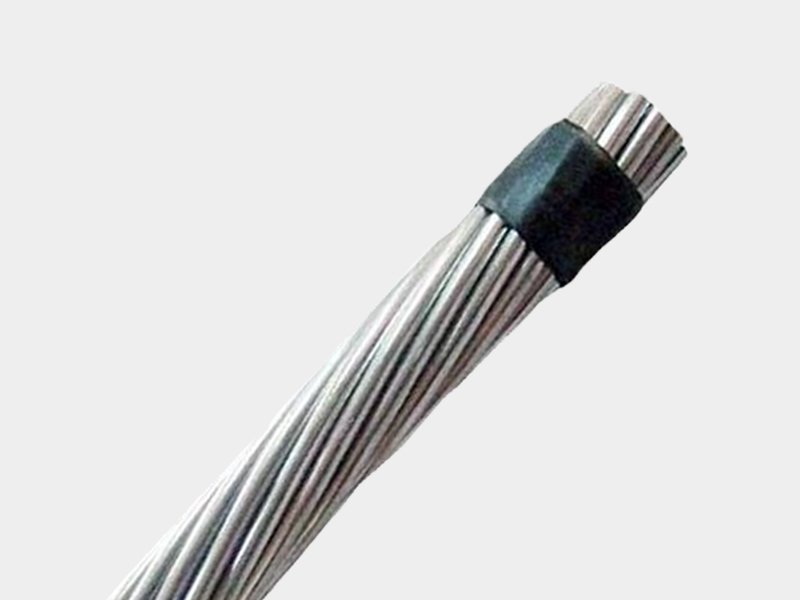
Outer Layer — Hard-drawn 1350 aluminium, concentric lay, right-hand outer layer
Inner Layers — Successive layers in alternating lay directions
No Steel Core — All-aluminium construction, no bimetallic interface
Code Name — Each size identified by a celestial body name (Mars, Mercury, Neptune, etc.)
AS/NZS 1531 — Australian & NZ Standard
Full compliance with the joint Australian and New Zealand national overhead conductor standard — mandatory for utility tender qualification and acceptance by all Australian state and territory network service providers and New Zealand line companies.
Celestial Code Name System
Unique planet and star names (Mars, Mercury, Moon, Neptune, Saturn, Sirius, Venus, Orion, Virgo, etc.) replace the flower names of ASTM/CSA. These code names are the procurement language of Australian and NZ utilities — appearing in line designs, hardware catalogues, and maintenance records.
61% IACS Conductivity
Hard-drawn 1350 aluminium delivers 61% IACS conductivity — maximum current capacity for overhead distribution at the conductor sizes most used in Australian and NZ networks (Mercury to Sirius range for most distribution feeders).
Ampacity at 75°C and 85°C
AS/NZS 1531 data tables include current ratings at both 75°C and 85°C maximum conductor temperature — reflecting Australian and NZ utility practice of using higher temperature ratings for new infrastructure to increase line capacity without hardware upgrades.
No Steel Core — Coastal & Tropical Suitability
All-aluminium construction eliminates galvanic corrosion at the aluminium-steel interface — preferred in coastal Queensland, northern Australia, and the New Zealand coastline where salt-laden air attacks ACSR steel cores over the 40+ year design life of overhead lines.
Compatible with AS/NZS Hardware
Conductor dimensions per AS/NZS 1531 are matched to Australian and NZ suspension clamps, deadend fittings, compression joints, and midspan joints from local hardware suppliers — ensuring direct fitment without conversion or custom hardware.
Technical Specifications
Basic Parameters
| Standard | AS/NZS 1531 — Conductors in Overhead Lines: Bare Aluminium and Aluminium Alloy |
|---|---|
| Conductor Material | Hard-drawn 1350-series electrolytic aluminium (≥ 99.7% Al purity) |
| Conductivity | 61% IACS (≥ 34.5 m/Ω·mm²) |
| Construction | Concentric-lay stranded, circular cross-section |
| Code Name Convention | Celestial body names (planets, stars, constellations) per AS/NZS 1531 |
| Size Range | Approx. 34 mm² (Gemini) to 674 mm² (Virgo) |
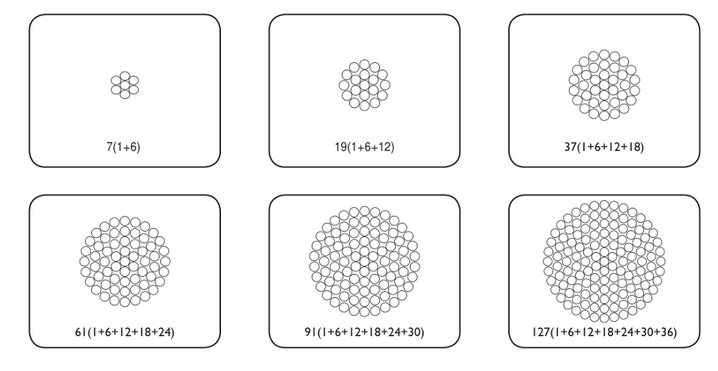
| Standard Wire Counts | 7 wires (small sizes); 19 wires (medium sizes); 37 wires (large sizes) |
| Max. Continuous Temperature | 75 °C (standard); 85 °C (high-temperature rating, both tabulated in AS/NZS 1531) |
| Surface Finish | Bare; grease-filled available on request |
| Packaging | Wooden or steel drum; standard lengths 500 m / 1000 m; custom lengths available |
Full Parameter Table — AS/NZS 1531 AAC
| Code Name | Stranding (No./mm) | Overall Ø (mm) | Calc. Area (mm²) | Weight (kg/km) | Rated Strength (kN) | DC Resistance (Ω/km, 20°C) | Current Rating @ 75°C (A) | Current Rating @ 85°C (A) |
|---|---|---|---|---|---|---|---|---|
| Gemini | 7/2.50 | 7.50 | 34.4 | 94 | 5.40 | 0.834 | 130 | 160 |
| Leo | 7/2.75 | 8.25 | 41.6 | 113 | 6.40 | 0.690 | 148 | 183 |
| Libra | 7/3.00 | 9.00 | 49.5 | 135 | 7.50 | 0.580 | 168 | 207 |
| Mars | 7/3.75 | 11.25 | 77.3 | 211 | 11.80 | 0.370 | 222 | 275 |
| Mercury | 7/4.50 | 13.50 | 111.3 | 304 | 16.90 | 0.258 | 278 | 345 |
| Moon | 7/4.75 | 14.25 | 124.0 | 339 | 18.90 | 0.232 | 298 | 370 |
| Neptune | 19/3.25 | 16.25 | 157.6 | 433 | 24.70 | 0.183 | 341 | 424 |
| Orion | 19/3.50 | 17.50 | 182.8 | 502 | 28.60 | 0.158 | 374 | 466 |
| Pluto | 19/3.75 | 18.75 | 209.8 | 576 | 32.40 | 0.138 | 406 | 506 |
| Saturn | 19/4.00 | 20.00 | 238.8 | 655 | 36.90 | 0.121 | 438 | 547 |
| Sirius | 19/4.25 | 21.25 | 269.8 | 740 | 41.60 | 0.107 | 470 | 588 |
| Taurus | 19/4.50 | 22.50 | 302.6 | 830 | 46.70 | 0.0954 | 502 | 629 |
| Triton | 19/4.75 | 23.75 | 337.2 | 924 | 52.10 | 0.0857 | 535 | 671 |
| Uranus | 37/3.50 | 24.50 | 356.0 | 977 | 55.90 | 0.0812 | 551 | 692 |
| Ursula | 37/3.75 | 26.25 | 408.4 | 1120 | 63.60 | 0.0708 | 596 | 749 |
| Venus | 37/4.00 | 28.00 | 465.0 | 1276 | 72.40 | 0.0621 | 644 | 811 |
| Virgo | 37/4.80 | 33.60 | 669.5 | 1836 | 104.40 | 0.0432 | 812 | 1024 |
Key Features & Technical Advantages
AS/NZS 1531 Regulatory Compliance
Certified to the joint Australian and New Zealand national standard — accepted by all state and territory distribution network service providers (DNSPs) and transmission companies for overhead line construction, refurbishment, and maintenance contracts.
Celestial Code Names — Industry Procurement Standard
Planet and star names (Mars = 77.3 mm², Mercury = 111.3 mm², Neptune = 157.6 mm², Saturn = 238.8 mm², Venus = 465 mm²) are the standard procurement identifiers in Australian and NZ utility project documentation. A conductor specified by its AS code name uniquely identifies size, material, and standard without further qualification.
Dual Temperature Rating (75°C / 85°C)
AS/NZS 1531 tabulates ampacity at both 75°C and 85°C conductor temperature. The 85°C rating allows Australian utilities to increase line capacity through thermal rating upgrades without conductor replacement — a common practice in network capacity management.
Corrosion Resistance for Australian Conditions
All-aluminium construction without a steel core resists the galvanic corrosion mechanism that degrades ACSR in Queensland coastal zones, Pilbara industrial areas, and the tropical north — environments where the 40-year design life of ACSR steel cores is frequently compromised by corrosion.
AS Hardware Compatibility
Conductor dimensions per AS/NZS 1531 match the bore sizes and grip lengths of Australian-standard compression hardware, deadend assemblies, and line post fittings from Preformed Line Products (PLP), Burndy, and local suppliers — no special tooling or custom hardware required.
Lightweight for Australian Terrain
AAC's all-aluminium construction minimises conductor weight and sag under self-weight loading — important in outback Australia where line routes cross flat terrain with long spans, and in steep terrain where minimum pole/tower loading reduces civil engineering costs.
AS/NZS 1531 Code Names — Quick Reference
| Code Name | Approx. Area (mm²) | Stranding | Typical Application |
|---|---|---|---|
| Gemini / Leo / Libra | 34–50 mm² | 7-wire | LV service connections, rural secondary distribution |
| Mars | 77 mm² | 7-wire | Rural 11 kV distribution, lightly loaded feeders |
| Mercury / Moon | 111–124 mm² | 7-wire | Standard 11 kV distribution — the most widely used AAC size in Australia |
| Neptune / Orion | 158–183 mm² | 19-wire | Heavy-duty 11–33 kV distribution, urban feeders |
| Saturn / Sirius | 239–270 mm² | 19-wire | 33–66 kV sub-transmission, high-capacity distribution |
| Taurus / Triton | 303–337 mm² | 19-wire | 66–132 kV sub-transmission lines |
| Uranus / Venus / Virgo | 356–674 mm² | 37-wire | 132 kV transmission, high-capacity bulk supply lines |
Certifications & Standards
Typical Applications
Australian Distribution Networks
11 kV and 33 kV overhead feeders for Ausgrid, Endeavour Energy, Essential Energy, Western Power, AusNet, Ergon Energy, and Energex distribution networks.
New Zealand Overhead Lines
Distribution and sub-transmission overhead lines for Transpower, Vector, Orion, Wellington Electricity, and other NZ line companies.
Rural & Outback Distribution
Long-span rural 11 kV feeders across flat outback terrain — AAC's conductivity advantage over ACSR is decisive where feeder lengths exceed 50 km.
Coastal Queensland & NT
Lines in tropical coastal environments where salt air and humidity make all-aluminium construction preferable to ACSR for long-term corrosion performance.
132 kV Sub-Transmission
Large AS/NZS 1531 sizes (Uranus, Venus, Virgo) for 132 kV sub-transmission lines connecting zone substations to bulk supply points.
Line Reconductoring
Replacement of aged Mercury or Neptune conductors on existing Australian overhead lines — exact AS/NZS 1531 size match ensures hardware compatibility.
Pacific Island Networks
Island nation utilities in Papua New Guinea, Fiji, Solomon Islands, and Vanuatu that follow Australian or NZ standards for overhead line construction.
Mining & Industrial Overhead
Overhead power supply to Australian mine sites, processing facilities, and industrial parks — frequently specified to AS/NZS 1531 to match local utility network conductor standards.