
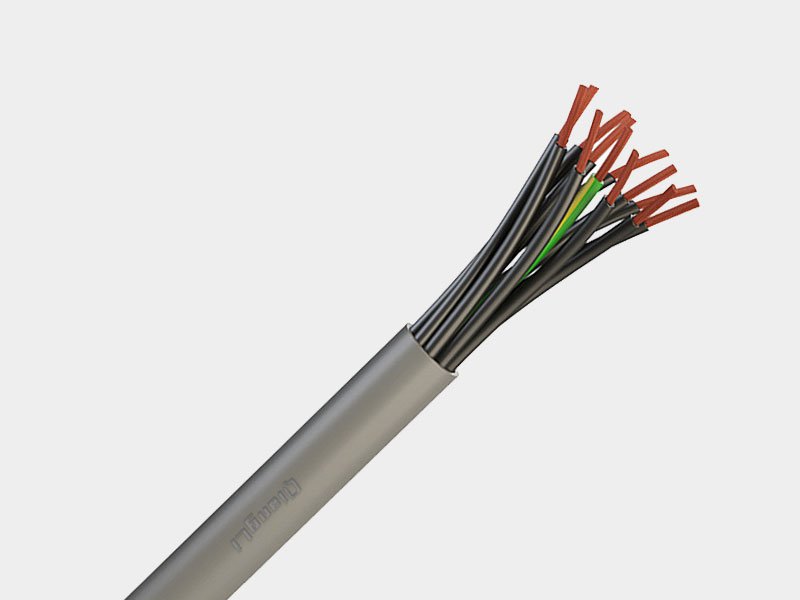
Product Overview
CVV Control Cable is a copper conductor, PVC insulated, PVC sheathed multi-core control cable rated at 450/750V, manufactured to KS C IEC 60502-1 — the Korean Standard adoption of IEC 60502-1. CVV is the baseline unshielded, unarmoured variant of the CVV cable family — the lightest, most economical, and most flexible configuration for control circuit applications where electromagnetic interference (EMI) shielding and mechanical armour protection are not required by the installation environment.
CVV is designed for supervisory electrical equipment, station control circuits, and general industrial control wiring. It is suitable for indoor and outdoor fixed installation in wet or dry locations, in conduit, duct, cable trench, and cable tray — wherever the raceway system provides adequate mechanical protection and the electromagnetic environment does not impose shielding requirements on the control circuits. When EMI shielding is required, add the -S suffix for CVVS (copper tape shielded); when armour protection is required for direct burial or rodent exposure, specify CVV22 (steel tape armour) or CVV32 (steel wire armour). When higher operating temperatures are required, CEV (75°C, PE insulation) or CCV (90°C, XLPE insulation) are the corresponding higher-temperature variants within the same CVV family.
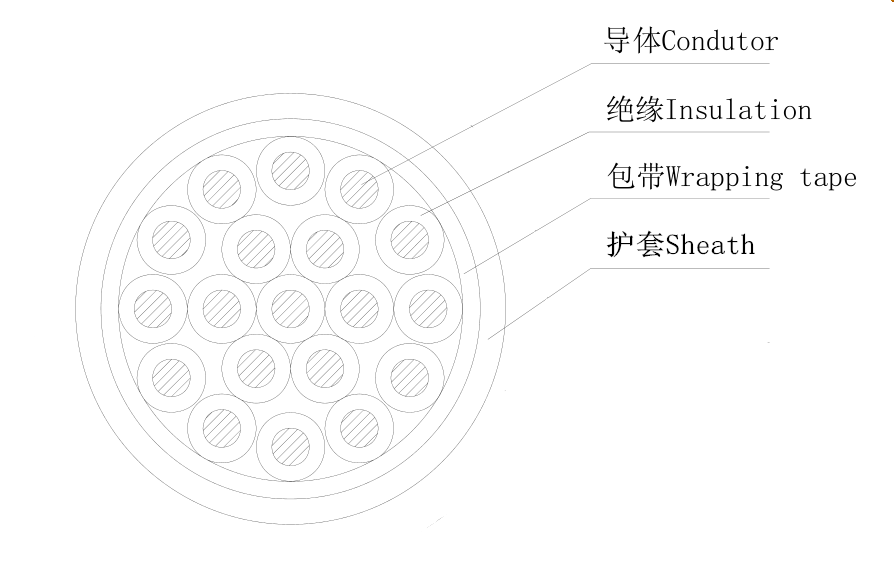
PVC Outer Sheath — Black, weather and chemical resistant
Polyester Tape Binder — Binds cabled cores before sheathing
PVC Insulated Cores — Black PVC with white sequential numbering
Stranded Annealed Copper Conductor — 7-wire concentric stranded, soft annealed
Unshielded — Lowest Cost Control Cable
Without the copper tape shield of CVVS, CVV is the most economical configuration for control circuits operating in environments with acceptable levels of electromagnetic interference — standard office and commercial building services, lightly loaded industrial sites, and circuits isolated from major EMI sources by adequate cable separation distance.
KS C IEC 60502-1 — Korean & IEC Standard
KS C IEC 60502-1 is accepted for Korean industrial projects, Korean contractor-led international projects, and IEC-specification international projects — one cable standard satisfies all three procurement environments simultaneously.
Lightest & Most Flexible in CVV Family
No shield layer, no armour layer — CVV is the lightest and most flexible configuration in the CVV cable family. Easier to pull through conduit, lay in cable tray, route through cable glands, and terminate in panels than CVVS (heavier) or CVV22/32 (heavier and stiffer). Minimum bending radius is lower than all armoured variants of equivalent cross-section.
Black Insulation + White Numbering
White sequential numbers on black PVC insulation provide high-contrast, permanent core identification — readable under oil contamination, in poor light, and after decades of thermal ageing. Consistent with the CVVS identification system, enabling mixed CVV/CVVS cable installations to use the same termination and wiring documentation convention.
Polyester Tape Binder
A polyester tape binder is applied over the assembled and laid-up cores before the outer sheath — maintaining the circular cross-section of the cable during extrusion, facilitating mid-span access if a splice or branch connection is needed, and providing a separation layer between the cores and the sheath that simplifies sheath removal at termination points.
CVV Family — Upgrade Path Built-In
CVV can be upgraded to CVVS (add copper tape shield), CVV22 (add steel tape armour), or CVV32 (add steel wire armour) without changing conductor, insulation, or core count specification — the same core count and cross-section is available across the entire CVV family, enabling straightforward specification upgrade when installation conditions change.
Technical Specifications
CVV Cable Family — Full Type Reference
| Symbol | Max. Temp. (°C) | Insulation | Sheath | Shield | Best For |
|---|---|---|---|---|---|
| CVV | 60 | PVC | PVC | None | General use — this product; lowest cost, most flexible |
| CVVS | 60 | PVC | PVC | Cu tape | EMI shielding required — same construction + copper tape shield |
| CEV | 75 | Polyethylene | PVC | None | 75°C continuous; lower dielectric constant than PVC |
| CCV | 90 | XLPE | PVC | None | 90°C continuous; highest temperature rating in family |
| CEE | 75 | Polyethylene | Polyethylene | None | Chemical/oil resistance; PE outer sheath |
| CCE | 90 | XLPE | Polyethylene | None | High temp + chemical resistance |
Basic Technical Parameters
| Standard | KS C IEC 60502-1 |
|---|---|
| Rated Voltage | 450/750V |
| Conductor | Soft annealed copper, 7-wire concentric stranded (7/0.40 mm for 1 mm²; 7/0.50 for 1.5 mm²; 7/0.67 for 2.5 mm²; 7/0.85 for 4 mm²; 7/1.04 for 6 mm²) |
| Insulation | PVC — black, white sequential number printed on surface |
| Binder | Polyester tape over cabled cores |
| Outer Sheath | PVC — black |
| No Shield / No Armour | Unshielded, unarmoured — raceway protection assumed |
| Core Counts | 2 / 3 / 4 / 5 / 6 / 7 |
| Conductor Sizes | 1.0 / 1.5 / 2.5 / 4.0 / 6.0 mm² |
| Max. Conductor Temperature | +60 °C (CVV-type PVC insulation continuous) |
| Min. Insulation Resistance | 0.0078–0.0135 GΩ·km at 70°C (varies by cross-section) |
| Max. DC Resistance (20°C) | 18.1 Ω/km (1.0 mm²) to 3.08 Ω/km (6.0 mm²) |
| Min. Bending Radius | 6 × overall diameter |
| Installation | Indoors and outdoors, wet or dry, in conduit / duct / cable trench / cable tray |
| Packaging | Wooden drum; standard lengths 500 m / 1000 m; custom lengths available |
Full Parameter Table — CVV Control Cable (KS C IEC 60502-1)
| Part No. | Cores | Section (mm²) | Conductor (No./mm) | Insulation (mm) | Sheath (mm) | Overall Ø (mm) | DC Resistance (Ω/km, 20°C) | Min. Insulation Resistance (GΩ·km, 70°C) | Weight (kg/km) |
|---|---|---|---|---|---|---|---|---|---|
| CVV-2C1.00SQ | 2 | 1.0 | 7/0.40 | 0.8 | 1.8 | 10.5 | 18.1 | 0.0135 | 115 |
| CVV-2C1.50SQ | 2 | 1.5 | 7/0.50 | 0.8 | 1.8 | 11.0 | 12.1 | 0.0115 | 135 |
| CVV-2C2.50SQ | 2 | 2.5 | 7/0.67 | 0.8 | 1.8 | 12.0 | 7.41 | 0.0093 | 180 |
| CVV-2C4.00SQ | 2 | 4.0 | 7/0.85 | 1.0 | 1.8 | 14.5 | 4.61 | 0.0092 | 255 |
| CVV-2C6.00SQ | 2 | 6.0 | 7/1.04 | 1.0 | 1.8 | 15.5 | 3.08 | 0.0078 | 320 |
| CVV-3C1.00SQ | 3 | 1.0 | 7/0.40 | 0.8 | 1.8 | 11.0 | 18.1 | 0.0135 | 135 |
| CVV-3C1.50SQ | 3 | 1.5 | 7/0.50 | 0.8 | 1.8 | 11.5 | 12.1 | 0.0115 | 160 |
| CVV-3C2.50SQ | 3 | 2.5 | 7/0.67 | 0.8 | 1.8 | 13.0 | 7.41 | 0.0093 | 220 |
| CVV-3C4.00SQ | 3 | 4.0 | 7/0.85 | 1.0 | 1.8 | 15.0 | 4.61 | 0.0092 | 315 |
| CVV-3C6.00SQ | 3 | 6.0 | 7/1.04 | 1.0 | 1.8 | 16.5 | 3.08 | 0.0078 | 405 |
| CVV-4C1.00SQ | 4 | 1.0 | 7/0.40 | 0.8 | 1.8 | 11.5 | 18.1 | 0.0135 | 160 |
| CVV-4C1.50SQ | 4 | 1.5 | 7/0.50 | 0.8 | 1.8 | 12.5 | 12.1 | 0.0115 | 195 |
| CVV-4C2.50SQ | 4 | 2.5 | 7/0.67 | 0.8 | 1.8 | 14.0 | 7.41 | 0.0093 | 265 |
| CVV-4C4.00SQ | 4 | 4.0 | 7/0.85 | 1.0 | 1.8 | 16.5 | 4.61 | 0.0092 | 390 |
| CVV-4C6.00SQ | 4 | 6.0 | 7/1.04 | 1.0 | 1.8 | 17.0 | 3.08 | 0.0078 | 510 |
| CVV-5C1.00SQ | 5 | 1.0 | 7/0.40 | 0.8 | 1.8 | 12.5 | 18.1 | 0.0135 | 190 |
| CVV-5C1.50SQ | 5 | 1.5 | 7/0.50 | 0.8 | 1.8 | 13.5 | 12.1 | 0.0115 | 230 |
| CVV-5C2.50SQ | 5 | 2.5 | 7/0.67 | 0.8 | 1.8 | 15.0 | 7.41 | 0.0093 | 320 |
| CVV-5C4.00SQ | 5 | 4.0 | 7/0.85 | 1.0 | 1.8 | 18.0 | 4.61 | 0.0092 | 470 |
| CVV-5C6.00SQ | 5 | 6.0 | 7/1.04 | 1.0 | 1.8 | 19.5 | 3.08 | 0.0078 | 620 |
| CVV-6C1.00SQ | 6 | 1.0 | 7/0.40 | 0.8 | 1.8 | 13.5 | 18.1 | 0.0135 | 205 |
| CVV-6C1.50SQ | 6 | 1.5 | 7/0.50 | 0.8 | 1.8 | 14.5 | 12.1 | 0.0115 | 255 |
| CVV-6C2.50SQ | 6 | 2.5 | 7/0.67 | 0.8 | 1.8 | 16.0 | 7.41 | 0.0093 | 355 |
| CVV-6C4.00SQ | 6 | 4.0 | 7/0.85 | 1.0 | 1.8 | 19.5 | 4.61 | 0.0092 | 525 |
| CVV-6C6.00SQ | 6 | 6.0 | 7/1.04 | 1.0 | 1.8 | 21.0 | 3.08 | 0.0078 | 690 |
| CVV-7C1.00SQ | 7 | 1.0 | 7/0.40 | 0.8 | 1.8 | 13.5 | 18.1 | 0.0135 | 215 |
| CVV-7C1.50SQ | 7 | 1.5 | 7/0.50 | 0.8 | 1.8 | 14.5 | 12.1 | 0.0115 | 270 |
| CVV-7C2.50SQ | 7 | 2.5 | 7/0.67 | 0.8 | 1.8 | 16.0 | 7.41 | 0.0093 | 380 |
| CVV-7C4.00SQ | 7 | 4.0 | 7/0.85 | 1.0 | 1.8 | 19.5 | 4.61 | 0.0092 | 570 |
| CVV-7C6.00SQ | 7 | 6.0 | 7/1.04 | 1.0 | 1.8 | 21.0 | 3.08 | 0.0078 | 795 |
Key Features & Technical Advantages
Most Economical Control Cable Configuration
CVV eliminates both the copper tape shield cost (CVVS adds ~8–12% to cable weight and cost) and the armour cost (CVV22/32 adds 30–60% to weight and cost) — providing the lowest unit price per metre of any configuration in the CVV family for applications where neither shielding nor armour is required by the installation environment.
Maximum Flexibility — Easiest to Install
Without shield or armour layers, CVV bends to a tighter minimum radius and weighs less per metre than any shielded or armoured variant of equivalent core count and cross-section. Pulling tension through conduit is lower, cable tray fill is reduced, and panel termination is simplified — less material means less installation time across the full project cable schedule.
Polyester Tape Binder — Core Stability
The polyester tape binder maintains the circular profile of the cabled cores during PVC sheath extrusion — preventing core migration to the cable periphery that would reduce sheath wall thickness at one side. It also provides a discrete separation layer between cores and sheath, making sheath removal at termination points cleaner and less likely to nick conductor insulation.
Upgrade Path Within CVV Family
When installation conditions change during design development — e.g. if a cable route must pass through a VFD room (add CVVS shield) or a section must be direct-buried (upgrade to CVV32) — the core count and conductor cross-section specification remains unchanged. Only the suffix and outer construction change, preserving the wiring design throughout the design revision.
Conduit & Tray System — Design for Raceway
CVV assumes that the mechanical protection function is performed by the cable raceway (conduit, duct, tray, trench). This design philosophy reduces cable cost while maintaining the protection level required for fixed indoor and outdoor installations in engineered cable management systems — standard practice in Korean and IEC-standard industrial and utility projects.
KS C IEC 60502-1 — Triple Market Acceptance
KS C IEC 60502-1 satisfies Korean domestic project specifications, Korean contractor-led international projects in Southeast Asia and the Middle East, and IEC-specification international tenders — enabling a single cable type to be procured once and deployed across all three market environments within the same plant or project.
Certifications & Standards
Typical Applications
General Industrial Control
Motor starter, switchgear, and relay panel wiring in factories where EMI levels are acceptable and conduit or cable tray provides mechanical protection — the most common CVV application.
Power Plant Secondary Wiring
Control and protection secondary circuits in power plants where cable routes are in enclosed cable trays or conduit and EMI shielding is provided by cable separation rather than individual cable shielding.
Substation Control Panels
Panel-to-panel wiring within substation control buildings — short indoor runs in enclosed cable management systems where neither shielding nor armour is required.
Building Services Control
BMS, HVAC, fire alarm, and access control system wiring in commercial buildings — CVV in enclosed cable shafts and under-floor cable management systems.
PLC / DCS Digital I/O
Digital (on/off) PLC I/O control wiring where EMI immunity of the 24V DC digital circuit makes copper tape shielding unnecessary — cost savings over CVVS for purely digital circuits.
Railway Control Systems
Fixed indoor control wiring for railway signalling equipment, interlocking systems, and platform control — CVV in enclosed cable management within station buildings and control rooms.
Water Treatment Facilities
Control wiring for treatment plant MCC and SCADA panels in indoor plant buildings — CVV where conduit provides mechanical protection and digital I/O circuits don't require shielding.
Korean-Standard Export Projects
International infrastructure and industrial projects executed by Korean contractors in Southeast Asia, the Middle East, and Africa — KS C IEC 60502-1 CVV meets both KS and IEC specification requirements.