
Product Overview
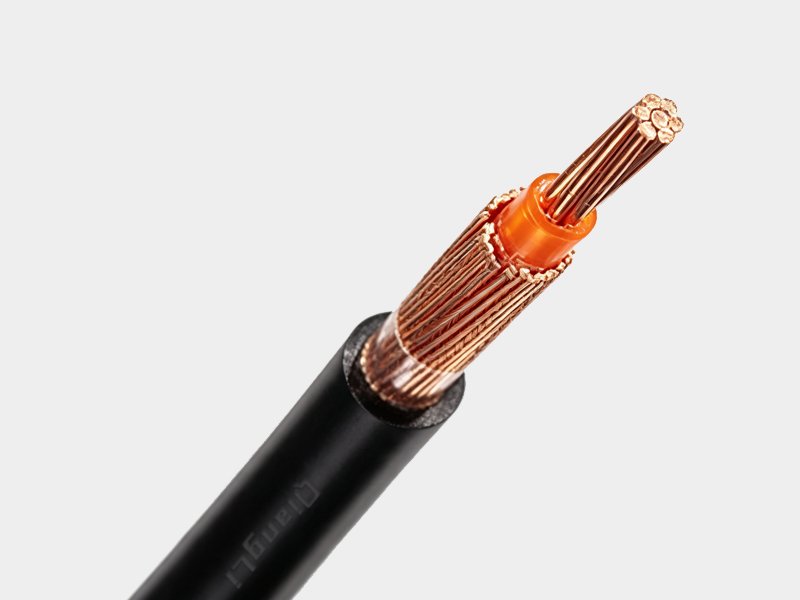
PVC Insulated Single Phase Concentric Copper Cable (KS 04-1022) is a single-phase service entry and distribution cable consisting of a circular stranded annealed copper phase conductor insulated with red PVC compound, concentrically covered with a layer of plain annealed copper wire neutral conductors wound over the insulated phase core, and finished with a black PVC outer sheath. Rated at 600V and below, it is manufactured to Kenya Standard KS 04-1022 and IEC 60502-1 — making it the standard single-phase residential and commercial service connection cable for Kenya Electric Company (Kenya Power) and the wider East African distribution network, as well as other African utility markets that have adopted KS 04-1022 or equivalent concentric cable standards.
A distinctive KS 04-1022 requirement is the red PVC insulation on the phase conductor — in contrast to the black insulation used in most other IEC concentric cable standards. This red insulation provides immediate visual identification of the phase (live) conductor at both ends of the cable and at any mid-point access, reducing the risk of phase-neutral reversal errors during installation and service. The phase conductor is laid with a left-hand direction of lay; the concentric neutral is applied with the right-hand direction of lay — the opposing lay directions create a mechanically locked assembly that resists relative rotation of the two conductor layers during cable bending and installation pulling.
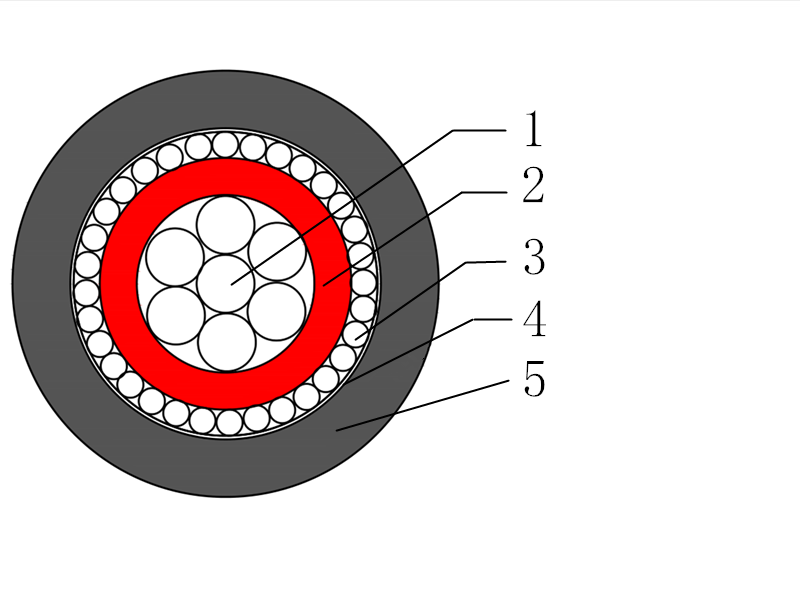
Black PVC Oversheath — Spark tested per KS 04-1022, extruded
Copper Wire Neutral (Right-Hand Lay) — Plain annealed copper wires, concentric, per KS 04-1022 Table 1
Red PVC Insulation — KS 04-1022 specified compound; spark tested; identifies phase conductor
Copper Phase Conductor (Left-Hand Lay) — Circular stranded Class 2 annealed copper, per KS 04-1022
KS 04-1022 — Kenya National Standard
Full compliance with the Kenya Bureau of Standards specification for single-phase PVC concentric service cable — mandatory for electrical connections installed under Kenya Power (KPLC) utility specifications and accepted across East African markets (Tanzania, Uganda, Rwanda) that reference KS 04-1022 or equivalent concentric cable standards for residential service entry.
Red Phase Insulation — KS 04-1022 Distinctive Requirement
Kenya Standard KS 04-1022 specifies red PVC compound for the phase conductor insulation — unique among IEC concentric cable standards, which typically use black or coloured insulation. Red phase identification provides immediate visual differentiation between the phase (live) conductor and the concentric neutral layer at all access points without requiring labels or markers.
Opposing Lay Directions — Mechanical Lock
Left-hand phase conductor lay combined with right-hand concentric neutral lay creates mechanical opposition between the two conductor layers — the opposing helical forces resist relative rotation of the neutral layer relative to the phase core during cable bending and installation pulling, maintaining concentricity and uniform neutral coverage throughout the cable length.
Anti-Theft — Concentric Neutral Protection
The concentric copper neutral layer encasing the phase conductor provides the standard anti-tampering protection of concentric cable design — accessing the live phase conductor for an illegal meter bypass requires cutting or unwinding the outer neutral layer, creating visible evidence of tampering for Kenya Power inspection crews at the service connection point.
Minimum Lay Length Specified
KS 04-1022 Table 1 specifies minimum lay lengths for the concentric neutral layer (140 mm for 10 mm²; 152 mm for 16 mm²; 165 mm for 25 mm²) — ensuring the neutral wires are wound tightly enough to maintain continuous electrical contact with each other along the full cable length, guaranteeing consistent neutral conductor resistance values in service.
Dual Spark Test — Phase Insulation & Oversheath
KS 04-1022 requires both the phase conductor insulation and the outer PVC sheath to be individually spark tested during manufacture — ensuring 100% insulation integrity of both the phase insulation and the sheath before the cable leaves the factory, not just sampling-based electrical testing.
Technical Specifications
Basic Parameters
| Standard | KS 04-1022 (Kenya Bureau of Standards) and IEC 60502-1 |
|---|---|
| Rated Voltage | 600V and below |
| Max. Operating Temperature | +70°C (PVC insulation continuous) |
| Phase Conductor | Circular stranded annealed copper (Class 2 per KS 04-1022) — left-hand direction of lay |
| Phase Insulation | Red PVC compound per KS 04-1022 — spark tested; extruded |
| Neutral Conductor | Plain annealed copper wires, concentric layer — right-hand direction of lay |
| Oversheath | Black PVC compound per KS 04-1022 — spark tested; extruded |
| Cable Profile | Round (single-phase concentric) |
| Sizes Available | 10 mm² / 16 mm² / 25 mm² |
| Installation | Dry and wet locations, outdoors, directly buried underground |
| Packaging | Wooden or steel drum; standard and custom lengths available |
Parameter Table — KS 04-1022 (Table 1 per Standard)
| Phase Area (mm²) | Phase Conductor (No./mm) | Insulation Thickness (mm) | Neutral Conductor (No./mm) | Min. Neutral Lay Length (mm) | Oversheath Thickness (mm) | Approx. Overall Ø (mm) | Phase DC Resistance (Ω/km, 20°C) | Neutral DC Resistance (Ω/km, 20°C) |
|---|---|---|---|---|---|---|---|---|
| 10 | 7/1.35 | 1.55 | 20/0.85 | 140 | 1.4 | 11.73 | 1.83 | 1.151 |
| 16 | 7/1.70 | 1.55 | 32/0.85 | 152 | 1.4 | 12.78 | 1.15 | 1.007 |
| 25 | 7/2.14 | 1.60 | 29/1.13 | 165 | 1.5 | 14.88 | 0.727 | 0.629 |
Key Features & Technical Advantages
Kenya Power (KPLC) Approved
KS 04-1022 is the Kenya Bureau of Standards specification directly referenced in Kenya Power and Lighting Company (KPLC) service connection specifications — cables manufactured to this standard are accepted without qualification for KPLC-supervised residential, commercial, and industrial service entry installations across the Kenya Power distribution network.
Red PVC — Phase Identification at Every Access Point
The KS 04-1022 requirement for red phase insulation means the live conductor is unambiguously identified at every point along the cable — at the meter socket, at the distribution board, at any intermediate access or joint, and at any damage site during excavation or maintenance. This persistent identification is particularly valuable in a single-phase cable where the phase-neutral polarity of an unmarked conductor could easily be lost during installation.
Copper-to-Copper Interface — No Galvanic Corrosion
Both the phase conductor and the concentric neutral are plain annealed copper — there is no bimetallic interface and no galvanic corrosion risk at the contact points between the phase insulation outer surface and the neutral wires. This is a significant advantage over cables using aluminium neutral wires on copper phase conductors in humid and wet installation environments.
Concentric Neutral — Full Phase Current Capacity
The neutral wire cross-section (20×0.85 mm = ~11.4 mm² at 10 mm² phase; 32×0.85 mm = ~18.2 mm² at 16 mm²; 29×1.13 mm = ~29.2 mm² at 25 mm²) provides neutral resistance close to the phase conductor resistance — ensuring adequate neutral current capacity for the full phase current in single-phase supply systems where neutral current equals phase current under balanced load conditions.
East Africa Market Standard
Beyond Kenya, KS 04-1022 concentric cable is widely accepted by distribution utilities in Tanzania (TANESCO), Uganda (UMEME), Rwanda (REG/EUCL), and other East African electricity authorities — enabling the same cable product to be procured and installed across multiple East African country distribution networks without re-qualification.
Outdoor & Direct Burial Suitable
Black PVC oversheath provides UV resistance and weather protection for outdoor service entry runs along building surfaces and pole risers, and adequate mechanical and moisture protection for direct burial of underground service connections from pole-mounted distribution transformers to residential meter sockets.
Certifications & Standards
Typical Applications
Residential Service Entry (Kenya)
Single-phase connection from Kenya Power distribution pole or service pillar to the electricity meter socket at residential premises — the primary and dominant application for KS 04-1022 concentric cable.
Meter to Distribution Board
Single-phase feeder from the KPLC meter panel to the main consumer unit / distribution board inside the residential premises — the downstream half of the standard Kenya residential service connection.
Commercial Premises Service
Single-phase service connection to small commercial premises — shops, restaurants, clinics, and small offices — under the Kenya Power standard service connection specifications.
Kenya Power Network
Kenya Power and Lighting Company (KPLC) supervised service connection installations across the Kenya national electricity distribution network — KS 04-1022 cable required for KPLC acceptance.
East African Utilities
TANESCO (Tanzania), UMEME (Uganda), REG/EUCL (Rwanda), and other East African distribution authorities accepting KS 04-1022 or equivalent IEC 60502-1 concentric cable for residential service connections.
New Residential Construction
Service connections for new residential housing developments and apartment blocks in Kenya — KS 04-1022 cable installed during building construction for the permanent utility service connection.
Rural Electrification Projects
Last-mile service connections under Kenya's Last Mile Connectivity Project and the Rural Electrification and Renewable Energy Corporation (REREC) programmes — KS 04-1022 for rural household connections from low-voltage distribution lines.
Anti-Theft Metering Infrastructure
Service connections in areas with significant electricity theft risk — concentric neutral makes illegal bypass connections at the meter socket physically difficult and visually detectable by KPLC inspection teams.