
Product Overview
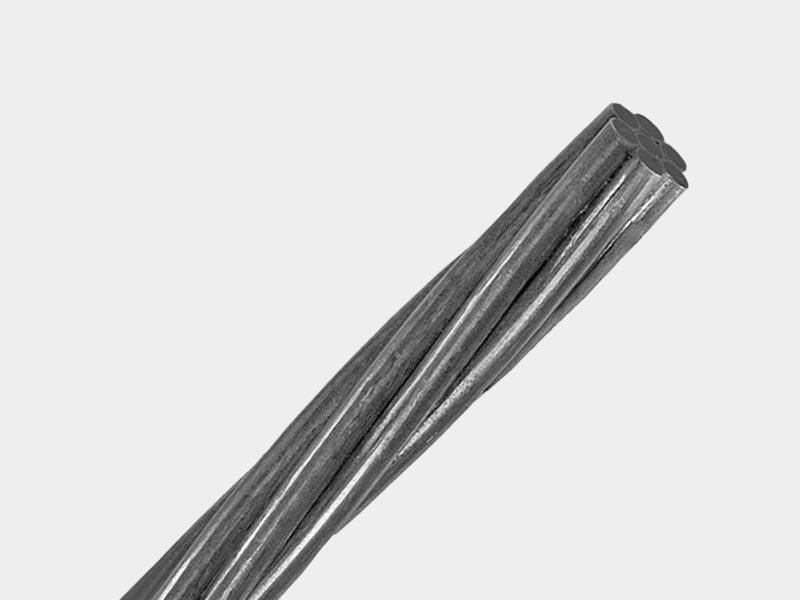
GSW — Galvanized Steel Wire Strand (IEC 61089) is a concentric-lay stranded high-carbon steel wire conductor, hot-dip zinc galvanised, manufactured to IEC 61089 — Round wire concentric lay overhead electrical stranded conductors. While IEC 61089 primarily governs aluminium overhead conductors (AAC, AAAC, ACSR), it also defines the mechanical and dimensional requirements for galvanised steel wire strand used as overhead ground wire, guy wire, and messenger wire in IEC-specification projects. The IEC 61089 standard uses a metric mm² cross-section series (4 to 63 mm²) and defines four strength grades — S1A, S1B, S2A, and S3A — in order of increasing breaking load, corresponding broadly to ASTM A475's Common/SM/HS/EHS grade hierarchy.
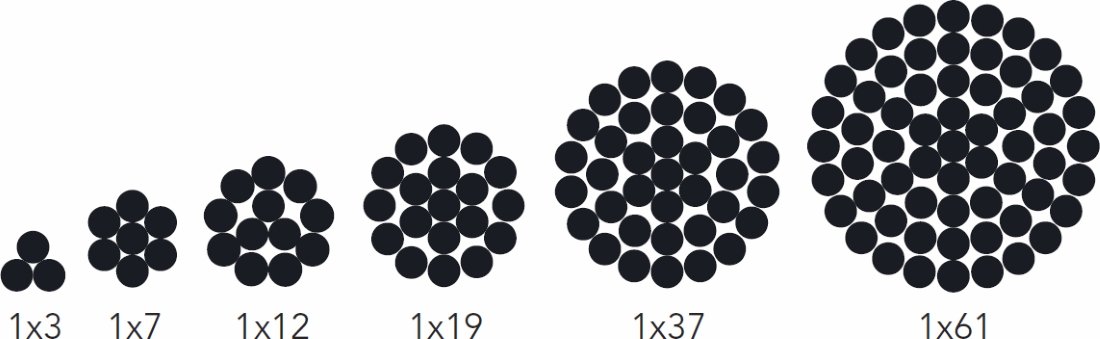
IEC 61089 GSW is a purely mechanical conductor — its function is structural, not electrical. The zinc galvanising provides corrosion protection for long-term outdoor service. Three zinc coating classes (Class A — standard; Class B — medium; Class C — heavy) are specified within IEC 61089, matching the zinc weight progression used in ASTM A475 for equivalent environment severity levels. Available in 7-wire and 19-wire concentric-lay constructions, nominal cross-sections from 4 mm² to 63 mm², covering the full range of IEC-specification overhead ground wire and structural strand applications.
Outer Steel Wires — High-carbon drawn steel, hot-dip zinc galvanised (Class A / B / C)
Inner Layers — Concentric-lay, alternating direction per layer
Central Wire — Single steel wire core
IEC Grade Codes — S1A / S1B / S2A / S3A in order of increasing breaking load
IEC 61089 — Global IEC Standard
Full compliance with the international overhead conductor standard — accepted by utilities across Europe, Africa, the Middle East, and Asia for overhead ground wire, guy wire, and messenger wire on IEC-specification transmission and distribution projects.
Four Strength Grades — S1A to S3A
S1A (lowest breaking load) through S3A (highest breaking load) — four grades covering the full range from light guying and short-span overhead earth wire to long-span EHV transmission ground wire requiring maximum tensile performance. S3A is the most commonly specified grade for demanding overhead earth wire applications.
Metric mm² Size Series
IEC 61089 uses 4 / 6.3 / 10 / 12.5 / 16 / 25 / 40 / 63 mm² nominal cross-sections — directly compatible with IEC AAC, ACSR, and AAAC conductor project specifications. All sizes, grades, and hardware sizing reference the same mm² designation system throughout the project documentation.
Dual Stranding at 16 mm² and 40 mm²
16 mm² is available in both 7/2.70 mm (7-wire) and 19/2.70 mm (19-wire) constructions; 40 mm² in both 19/4.26 mm (19-wire) and 37/3.05 mm (37-wire). The 19-wire and 37-wire options provide higher breaking loads at the same nominal cross-section by distributing tensile load across more wires.
Hot-Dip Zinc Galvanising
Class A (standard), Class B (medium), and Class C (heavy) zinc coatings per IEC 61089 — progressively heavier zinc weight for progressively more corrosive environments. Class C is specified for severe marine, coastal industrial, and tropical environments where zinc depletion rate is highest.
Low Creep — Stable Long-Term Tension
High-carbon steel has inherently low creep at ambient temperatures — IEC GSW maintains its stringing tension over decades of service without significant permanent elongation. This property makes steel strand indispensable for guy wire and messenger applications where sustained load-bearing performance is required.
Technical Specifications
Basic Parameters
| Standard | IEC 61089 — Round wire concentric lay overhead electrical stranded conductors (galvanised steel wire section) |
|---|---|
| Related Standards | ASTM A475 (North American equivalent); BS 183 (British standard); IEC 61089 also governs AAC/AAAC/ACSR |
| Wire Material | High-carbon drawn steel wire, hot-dip zinc galvanised |
| Strength Grades | S1A / S1B / S2A / S3A (in order of increasing breaking load) |
| Zinc Coating Classes | Class A (standard) / Class B (medium) / Class C (heavy — severe environments) |
| Construction | 7-wire (4–16 mm²); 19-wire (16–40 mm²); 37-wire (40–63 mm²) |
| Nominal Area Range | 4 / 6.3 / 10 / 12.5 / 16 / 25 / 40 / 63 mm² |
| Primary Use | Mechanical / structural — overhead ground wire, guy wire, messenger wire, stay wire |
| Conductivity | ~17% IACS (steel) — not a current-carrying conductor in typical applications |
| Packaging | Wooden or steel drum; standard lengths 500 m / 1000 m; custom lengths available |
IEC Strength Grade vs ASTM A475 — Cross-Reference
| IEC 61089 Grade | ASTM A475 Equivalent | BS 183 Equivalent | Relative Breaking Load | Typical Application |
|---|---|---|---|---|
| S1A | Common (C) | Grade 1 (approx.) | Base reference | Light guying, temporary strand, low-load distribution |
| S1B | Siemens-Martin (SM) | Grade 2 (approx.) | ~8% below S2A | Standard utility pole guying, distribution line guys |
| S2A | High-Strength (HS) | Grade 3 (approx.) | Higher | Transmission tower guys, medium-long overhead earth wire |
| S3A | Extra High-Strength (EHS) | Grade 4 (approx.) | Highest | EHV tower guys, long-span ground wire, river crossings |
Full Parameter Table — IEC 61089 GSW (Hongda Data)
| Code (mm²) | Calc. Area (mm²) | Stranding (No./mm) | Overall Ø (mm) | Weight (kg/km) | Breaking Load S1A (kN) | Breaking Load S1B (kN) | Breaking Load S2A (kN) | Breaking Load S3A (kN) |
|---|---|---|---|---|---|---|---|---|
| 4 | 27.1 | 7/2.22 | 6.66 | 213.3 | 36.3 | 33.6 | 39.3 | 43.9 |
| 6.3 | 42.7 | 7/2.79 | 8.36 | 335.9 | 55.9 | 51.7 | 60.2 | 67.9 |
| 10 | 67.8 | 7/3.51 | 10.53 | 553.2 | 87.4 | 80.7 | 93.5 | 103.0 |
| 12.5 | 84.7 | 7/3.93 | 11.78 | 666.5 | 109.3 | 100.8 | 116.9 | 128.8 |
| 16 | 108.4 | 7/4.44 | 13.32 | 853.1 | 139.9 | 129.0 | 199.7 | 164.8 |
| 16 | 108.4 | 19/2.70 | 13.48 | 857.0 | 142.1 | 131.2 | 152.9 | 172.4 |
| 25 | 169.4 | 19/3.37 | 16.85 | 1339.1 | 218.6 | 201.6 | 238.9 | 262.6 |
| 40 | 271.1 | 19/4.26 | 21.31 | 2141.6 | 349.7 | 322.6 | 374.1 | 412.1 |
| 40 | 271.1 | 37/3.05 | 21.38 | 2148.1 | 349.7 | 322.6 | 382.3 | 420.2 |
| 63 | 427.0 | 37/3.83 | 26.83 | 3383.2 | 550.8 | 508.1 | 589.3 | 649.0 |
Key Features & Technical Advantages
IEC mm² Series — Seamless Project Integration
IEC 61089 GSW shares the same mm² cross-section designation system as IEC AAC, ACSR, and AAAC phase conductors. A project specifying 150 mm² ACSR phase conductors and 25 mm² GSW earth wire uses consistent sizing language across all overhead line conductors — simplifying drawings, BOMs, and hardware specifications.
Highest Tensile Strength per Cross-Section
Steel provides the highest breaking load of any common conductor material at equivalent cross-section. S3A grade 63 mm² GSW achieves 649 kN breaking load — far exceeding what any aluminium conductor of the same 63 mm² cross-section can provide. This extreme strength makes GSW indispensable for long-span and heavily loaded structural applications.
Dual Stranding Flexibility
For 16 mm² and 40 mm², both 7-wire/19-wire (16 mm²) and 19-wire/37-wire (40 mm²) constructions are available. The higher wire-count constructions distribute tensile load across more wires, providing slightly higher rated breaking load and greater flexibility — useful for tight radius installations and installations requiring reduced Aeolian vibration sensitivity.
Aeolian Vibration Self-Damping
Multi-wire concentric-lay steel strand dissipates wind-induced Aeolian vibration energy through inter-wire friction and micro-slip — inherently more vibration-tolerant than single steel rod of equivalent cross-section. This self-damping extends fatigue life at suspension clamp locations on overhead earth wire over decades of service.
Corrosion Protection by Grade
Class A zinc coating is standard for most inland and suburban environments. Class B is specified for coastal proximity and moderate industrial pollution zones. Class C provides maximum zinc weight for severe marine, tropical, and chemically contaminated environments — matching the corrosion protection level to the site classification per IEC 60721 or project environmental assessment.
Low Creep for Stable Guy and Messenger Tension
High-carbon steel's inherently low creep rate at ambient temperature ensures that guy wire and messenger wire tension remains within design limits throughout the service life — unlike aluminium conductors which exhibit significant creep under sustained tensile load and require periodic re-tensioning or initial pre-tensioning allowances.
Certifications & Standards
Typical Applications
Overhead Ground Wire (IEC Lines)
Static protection wire on IEC-standard HV and EHV transmission lines — GSW provides tensile strength to match sag profile of phase conductors while shielding from direct lightning strikes.
Utility Pole Guy Wire
Tensile support for wood and concrete utility poles on IEC-specification distribution and sub-transmission lines across Europe, Africa, Middle East, and Asia.
Transmission Tower Stay Wire
S3A grade for guying steel lattice transmission towers on IEC-standard HV and EHV lines — maximum breaking load for tall structures under severe wind and ice loading.
Messenger Wire
Structural support strand for aerial cable on IEC-specification overhead plant — GSW messenger for ADSS fibre, lashed cable, and self-supporting aerial distribution cable.
Long-Span & River Crossings
S3A EHS-equivalent grade for long-span overhead ground wire crossings of rivers, valleys, and ravines on IEC-standard transmission lines — maximum breaking load for spans exceeding 500 m.
IEC-Market Global Projects
Europe, Africa, Middle East, South Asia, and Southeast Asia infrastructure projects where IEC 61089 is the governing overhead conductor standard — mm² sizing integrates directly with IEC project specifications.
Industrial & Substation Structures
Stay wire for guyed masts, antenna towers, and substation structures — S2A and S3A grades for heavy structural loading on IEC-specification industrial facilities.
Rural IEC Distribution Lines
Guy wire for IEC-specification rural distribution poles in Africa and Asia — S1A and S1B grades for standard guying on lightly loaded wood-pole distribution lines.